
Reasoning Rockets, Physical AI, and the GPU Whiplash
August ’25’s second week marked a leap in AI reasoning, robotics, and GPU-powered infrastructure.
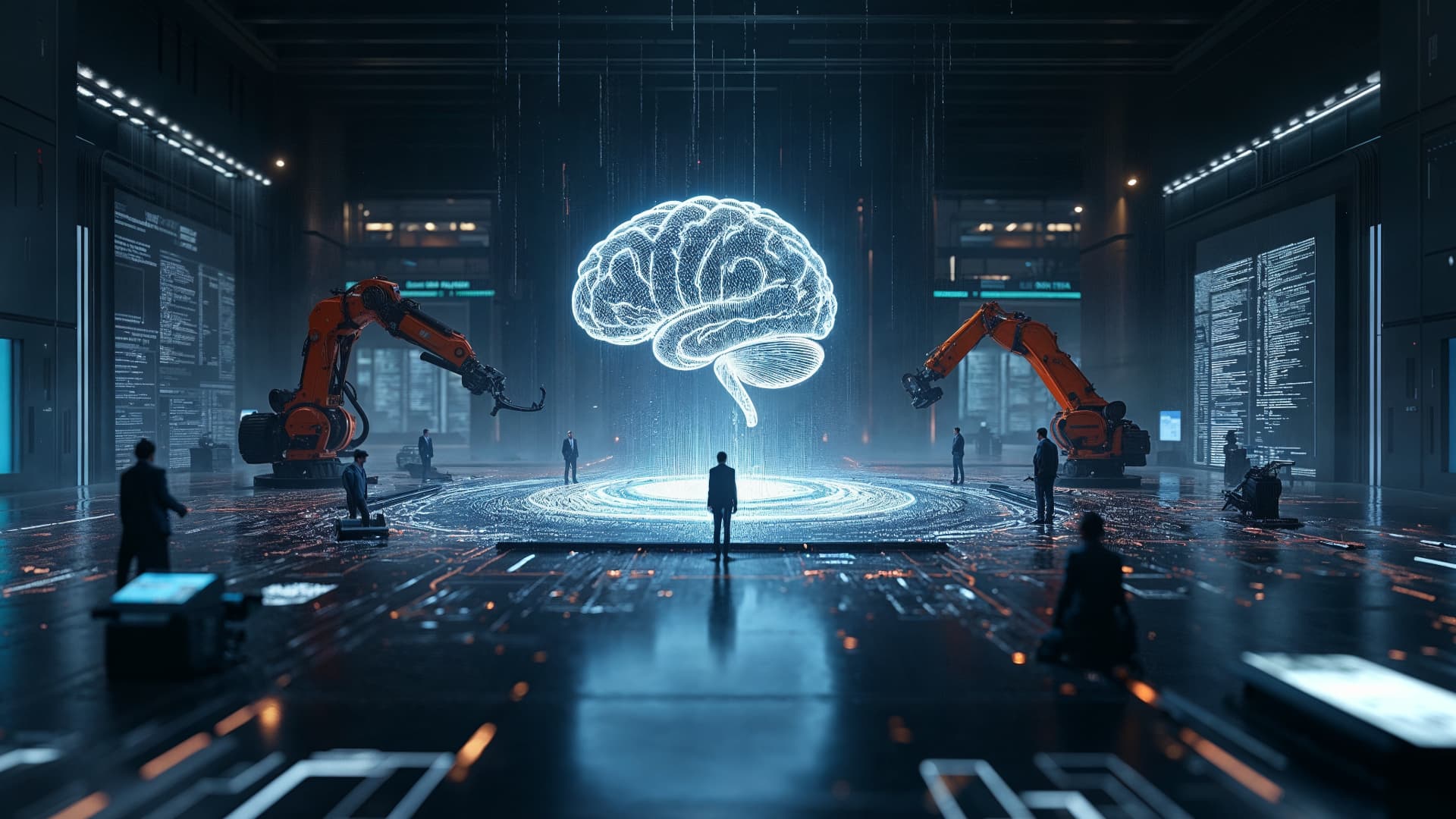
Reasoning Rockets, Physical AI, and the GPU Whiplash
NewMind AI Weekly Chronicles – August ’25, Week II
The second week of August brought a full-stack jolt to the AI world. OpenAI unveiled GPT-5, blending the deep reasoning capabilities of its O-series with the speed of its GPT line, while Anthropic’s Claude 4.1 set a new benchmark in coding with a 95% HumanEval score. Cerebras demonstrated staggering throughput on its WSE-3, pushing 3,000 tokens per second, and NVIDIA introduced Cosmos, a suite of world models designed to give robots and video agents richer physical understanding. The message was clear: AI is breaking out of text-only confines and into systems that engage directly with the physical and digital worlds.
Hardware & Infrastructure: Throughput Becomes the Moat
Infrastructure kept pace with model breakthroughs. NVIDIA’s SIGGRAPH showcase paired Cosmos with Omniverse upgrades for synthetic data generation, robotics planning, and video understanding—backed by a software stack tuned for efficiency. CUDA 13.0, vGPU 19.0, XGBoost 3.0 optimized for Grace Hopper, and cuDF JIT kernel fusion tightened the data path, signaling a shift toward compute pipelines as the next competitive moat. Cerebras’ WSE-3 reinforced this trend with record-setting inference speeds.
Agents and Frontier Models: Reasoning at Scale
OpenAI’s GPT-OSS introduced a sandbox for multi-agent experimentation, while Google debuted Jules, a coding specialist, alongside enterprise-grade data analysis agents woven into BigQuery and Colab. xAI’s Grok-4 opened to free users, further expanding top-tier access. These releases reflected a broader move toward agents as fully operational actors rather than passive copilots.
Multimodal and Simulation: Worlds from Words
On the multimodal frontier, DeepMind’s Genie 3 offered a leap in interactive simulation, generating playable 3D environments from text, images, or video. NVIDIA’s Cosmos Reason infused robotics and video analytics with physics-aware perception. Open-source momentum continued with Meta’s CLIP 2, boosting multilingual vision-language, and NuMarkdown-8B-Thinking, which transforms messy documents into structured, layout-aware outputs.
Open and Accessible: AI Beyond the Walled Gardens
OpenAI models arrived on AWS for the first time, breaking Azure exclusivity and widening enterprise reach. Smaller models showed their edge: Alibaba’s Qwen3 4B “Thinking” variant offered deep reasoning with a 256K-token context, Cohere’s North-GA targeted advanced retrieval-augmented generation, and Microsoft’s phi-3-mini enabled on-device reasoning through Copilot Runtime.
Enterprise Momentum: Agents at Work
TD Securities deployed real-time equity insight agents built with OpenAI and Layer 6. Aquant launched a no-code agent platform for service organizations. Google Finance began testing an AI-chat interface capable of live market insights and dynamic charting—bringing agentic intelligence to mainstream consumer and enterprise tools alike.
Policy, Markets, and Geopolitics: The Stakes Rise
The EU AI Act reached finalization, establishing new transparency and risk-tier frameworks. In the U.S., the Commerce Department proposed claiming 15% of AI-chip export revenue to China. OpenAI explored a major secondary share sale, and Tesla wound down its Dojo program, pivoting toward inference-first chips via partnerships.
Research Watch: Trust, Personality, and Security
VeriTrail introduced a way to trace hallucinations across multi-step reasoning chains. Persona Vectors enabled persistent model “personalities” embedded in vector space. R-Zero generated its own reasoning curriculum from scratch, while new benchmarks—DeepPHY, WideSearch, and VeriGUI—stressed models on physical reasoning, large-scale information retrieval, and extended GUI task completion. Security researchers warned of “cognitive injections,” hidden puzzle-like triggers that can manipulate multimodal agents—an early warning of vulnerabilities in an agent-driven era.
What This Signals
Reasoning is no longer confined to the prompt—it is being built into every layer of the stack. Chips, compilers, simulators, and agents are evolving together. The next defensible moat won’t just be model weights but the operating systems for orchestrating intelligent, governed, and physically-aware systems. The winners will be those who can spin up the flywheels of data movement, world modeling, and trusted autonomy faster than the rest.
For the full breakdown and links, see the NewMind AI Weekly Chronicles – August ’25, Week II.